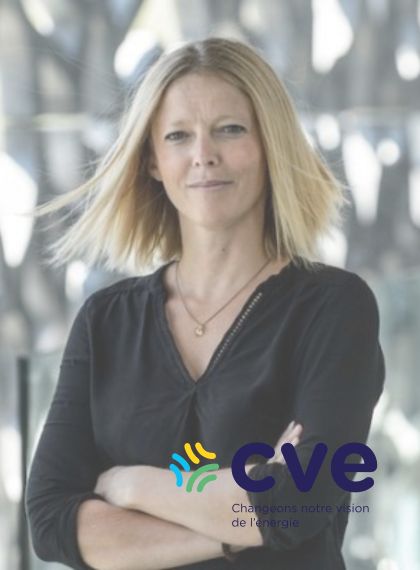
"Demystifying, encouraging open communication, and creating a climate of trust: this is how our teams take a step back and feel better equipped."
My name is Sandie Colin, and I am the Human Resources Director at CVE. CVE stands for "Changeons notre Vision de l'Énergie" (Let's Change Our View of Energy). It is a renewable energy producer that operates in the solar and biogas sectors and has around 400 employees in France.
How has the perception of mental health evolved at CVE?
At CVE, we are driven by three important values in our business plan: commitment, excellence, and fulfillment, with a focus on enabling individual and collective fulfillment. Naturally, mental health was one of our concerns. However, we weren't quite sure how to address it. It was a taboo subject.
Today, I would say that things have changed. I think we have succeeded in making the subject less taboo. This has been achieved through awareness-raising and communication initiatives, and perhaps our approach has helped to bring about change on this issue, which is now a major national cause for the government.
However, we still have progress to make. We must continue these prevention and awareness-raising efforts, because we don't all address these issues in the same way. For some people, it's still unknown, even completely under the radar.
Why is mental health a strategic issue for CVE?
I consider mental health to be a strategic issue, insofar as we want to align ourselves with our values and enable everyone to embody them. At CVE, we have this value of fulfillment, so it's important to be aligned.
It's also about giving ourselves the chance to embody the other two values, which are excellence and commitment.
One of the challenges we face, in my opinion, is a lack of understanding about mental health. We don't really know what's behind it, what the disorders are, what it represents. And then another challenge is: how to welcome and support those around us who may find themselves in a situation where their mental health is compromised.
What actions are you taking to strengthen mental health awareness at CVE?
At CVE, we have implemented the following concrete actions.
First, we have been measuring employee satisfaction for more than ten years. This has enabled us to highlight mental health issues and, as a result, to put in place concrete action plans tailored to the situations that were reported.
Next, we implemented awareness-raising and communication initiatives. The idea behind this is to educate teams, provide them with vocabulary, and ensure they know what we are talking about.
Finally, we have more than 20 employees who have volunteered to train in PSSM, or "First Aid in Mental Health." This is a civic training program, somewhat equivalent to first aid training in the workplace.
And then, the latest initiative we have recently rolled out is to offer the Holivia solution to employees, which gives them access to content on this topic, tailored to their own needs, or to call on expert psychologists.
What impact have these actions had on your teams and your management culture?
These actions have helped to make mental health less of a taboo subject. I think we have managed to create a climate of trust around these issues, where people feel able to express themselves and talk about them.
Here's an anecdote I'd like to share: in the past, we used to call on an occupational psychologist quite frequently to help employees in very delicate situations.
A few years later, this occupational psychologist told me that he was being called on less often. For me, this was proof that, ultimately, our awareness-raising and communication efforts had perhaps enabled teams to take a step back, feel less overwhelmed, and be better equipped to deal with the issue.
And finally, with regard to managerial culture, I would venture to say that if managers are able to take better care of their mental health, they will in turn be better able to support their teams.
How do you feel about the growing importance of mental health in HR and management discussions at CVE?
The fact that mental health is becoming an increasingly common topic of conversation leads me to believe that we are slowly demystifying the subject, making it less taboo and encouraging people to talk about it.
However, these remain sensitive and sometimes difficult topics. We still have a long way to go in terms of our understanding of these issues. We also sometimes find ourselves at a loss when faced with difficult situations that may be brought up by employees, sometimes out of fear or modesty, because they also touch on issues related to their private lives.
What messages would you like to convey to your peers or leaders?
The first is to say that if it is impossible to address the root causes of psychosocial risks and mental health issues in the workplace, it may be because it is too difficult, linked to factors outside the company.
However, what we can do is at least continue to focus on prevention, communicate, and open our doors, so that these topics become less taboo.
The second message is to realize that mental health is not just a "personal problem." We now know that the balance between our private and professional lives is very delicate.
Mental health is therefore an issue that must be viewed as a whole.
What would be your motto for promoting mental health in the workplace?
That would be: demystify.
Let's go, let's talk about it!
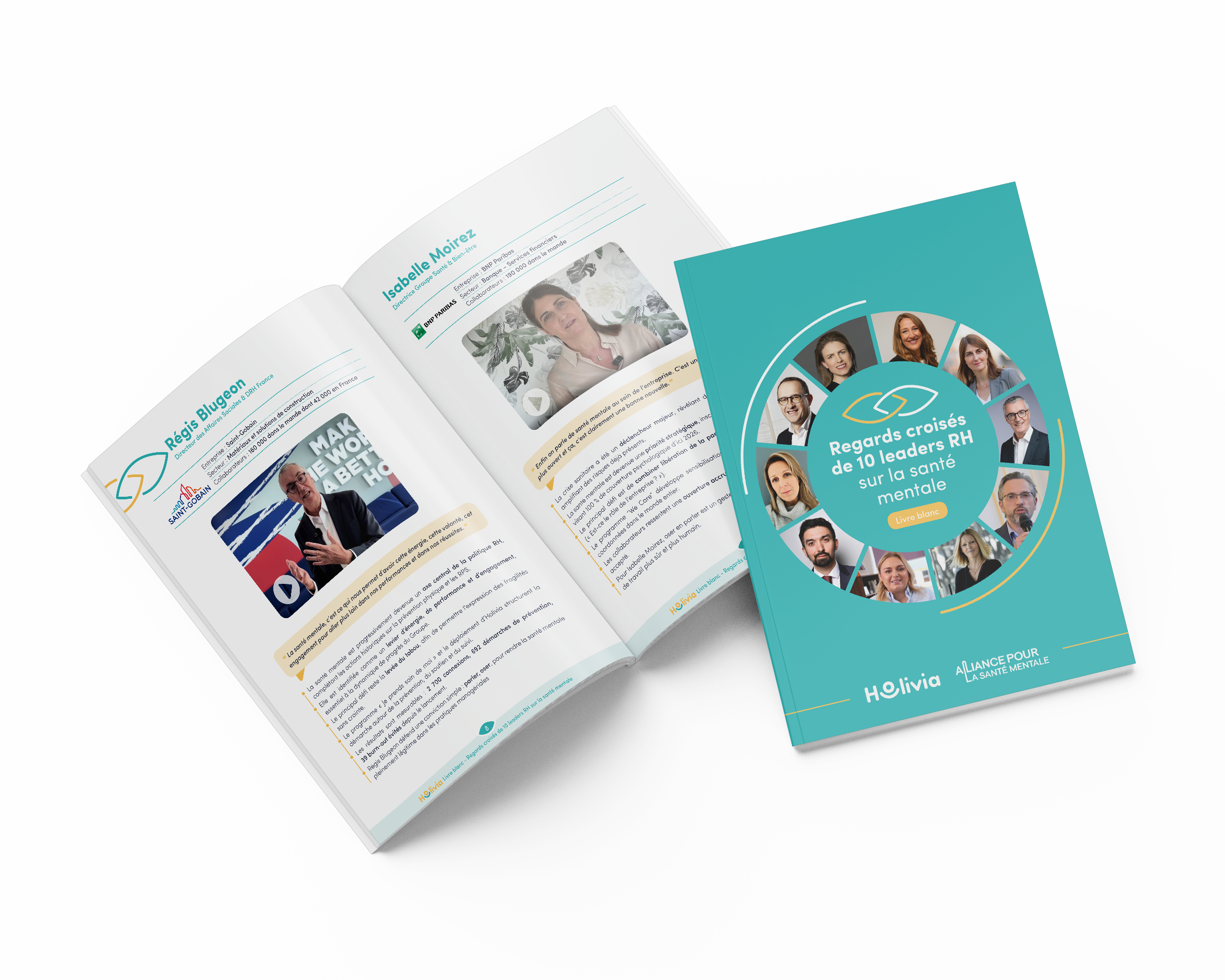
Other HR leaders shared the transformation they are bringing about in their companies. Discover the interviews conducted in 2025, the common dynamics observed, and our recommendations for action in our latest book: Perspectives from 10 HR leaders on mental health.





.png)