
Prevention and trust: the two essential levers for making mental health a pillar of sustainable performance.
My name is Melanie Martin, and I am the Human Resources Manager at Groupe Vitamine T.
Groupe Vitamine T is the leader in integration through economic activity in France. We operate in several areas, and I am responsible for the Temporary Employment and Skills department.
How has the perception of mental health evolved within the Vitamin T Group?
My perception of mental health in the workplace is that it's not an easy topic to address. We really try to make it central to our business: we try to put people first.
This perception has really changed since we rolled out Holivia. I believe that knowing that employees feel good and that they have identified resources to turn to when times are tough—or simply to develop themselves, since it is also a platform for personal development—is a pillar of a company's sustainable performance.
Why is mental health a strategic issue for the Vitamine T Group?
Mental health, for me, is really a strategic issue, since we are in professions focused on supporting and helping others.
It's important to have resources to take good care of yourself, so that you can properly support and care for others.
In terms of leverage, we can see that it helps us to work more preventively than reactively. For performance, both economic and social—since we work on both aspects—it is essential.
What measures are you putting in place to raise awareness of mental health within the Vitamine T Group?
We have implemented several initiatives.
The first is the rollout of the Holivia platform, accompanied by a genuine commitment to support: training our managers, raising awareness of mental health, breaking down taboos, and encouraging open discussion.
We also have activity kits: at specific times or throughout the year, they help to engage teams and remind them that this is not a one-off issue, but an everyday issue, and that resources are available.
Tomorrow, I want to go further and ensure that mental health is present at every stage of HR life. This starts with onboarding, by making it clear from the onboarding kit that, at our company, being able to express oneself on these topics is one of our values.
What impact have these actions had on your teams and your management culture?
The impact is threefold.
First, in social relations: we initiated this work with the members of the CSE. It was a matter of trust, asking ourselves together what actions we wanted to take. This enabled us to have spokespersons on this topic among our employees.
Second, with the employees themselves: thanks to the platform, we can measure whether they log in and consume content. We have noticed that they consume a lot of content related to personal development and that, between the first appointment and the last, the self-assessment reveals a real beneficial effect. This is the most important lever for us.
Finally, it has an impact on managerial culture: by strengthening prevention, we avoid finding ourselves in situations that are too complex or difficult to manage.
How do you feel about the growing importance of mental health in HR and management discussions within the Vitamine T Group?
I think this is a real step forward. It's 2025, and it was time to address this issue and make it less taboo.
As HR professionals, we help to get these messages across. This development helps us to focus more on prevention than reaction. And, ultimately, prevention is the most important part of the job when it comes to avoiding situations that are too complex or too complicated to manage.
We have done a lot of work on this preventive aspect.
What message would you like to convey to your peers or leaders?
If I had to send a message to my HR peers or fellow executives, it would be: take action.
We have a strong human culture, not only because of our integration activities, but also in our management culture. We realize that if we are involved in prevention, support, and "taking care" of the company, this means taking care of our employees. Ultimately, this contributes to the company's performance.
What would be your motto for promoting mental health in the workplace?
If I had to sum up my motto, it would be: proactivity and confidence. This is the ideal foundation for ensuring that mental health is addressed with the importance it deserves.
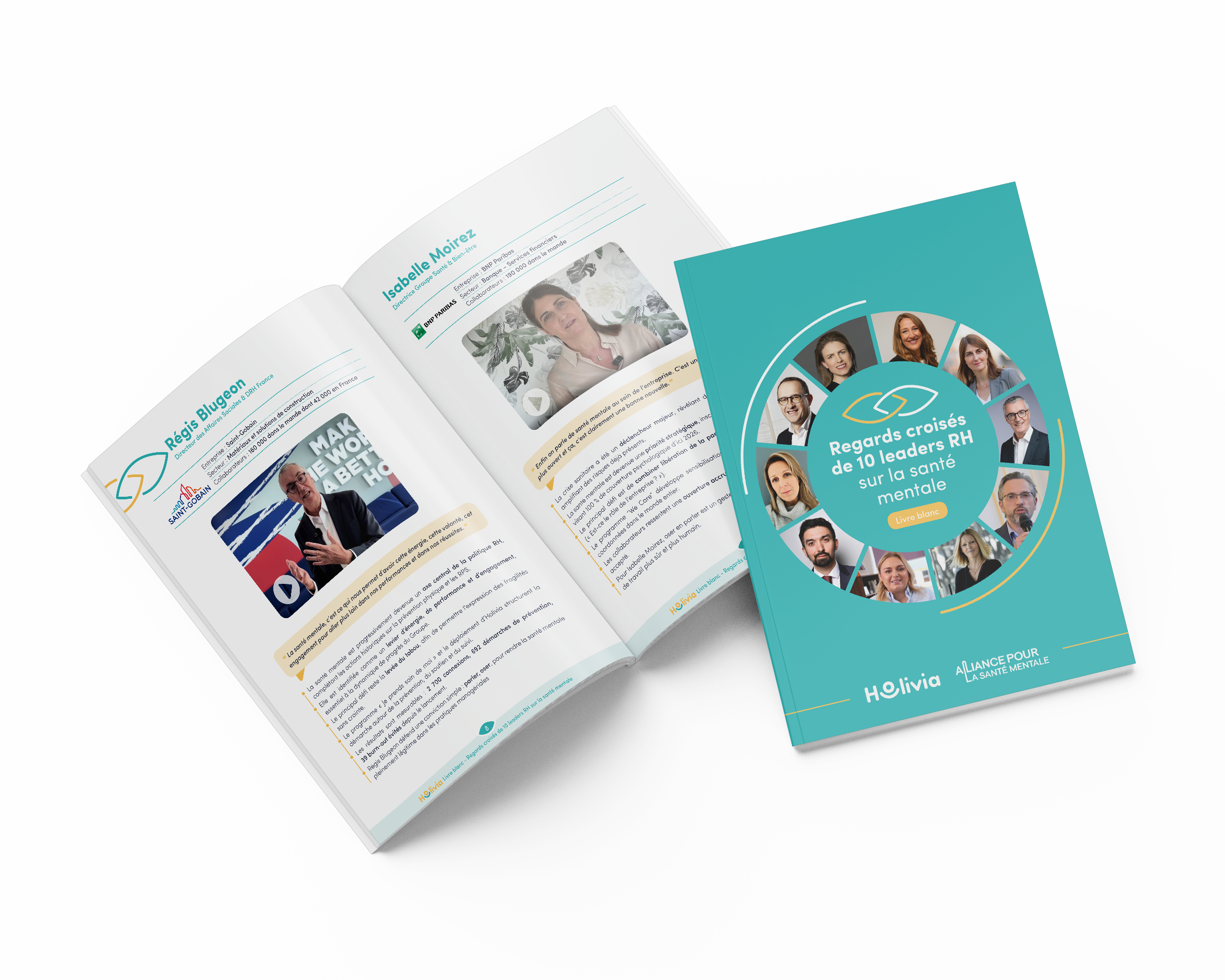
Other HR leaders shared the transformation they are bringing about in their companies. Discover the interviews conducted in 2025, the common dynamics observed, and our recommendations for action in our latest book: Perspectives from 10 HR leaders on mental health.




.png)